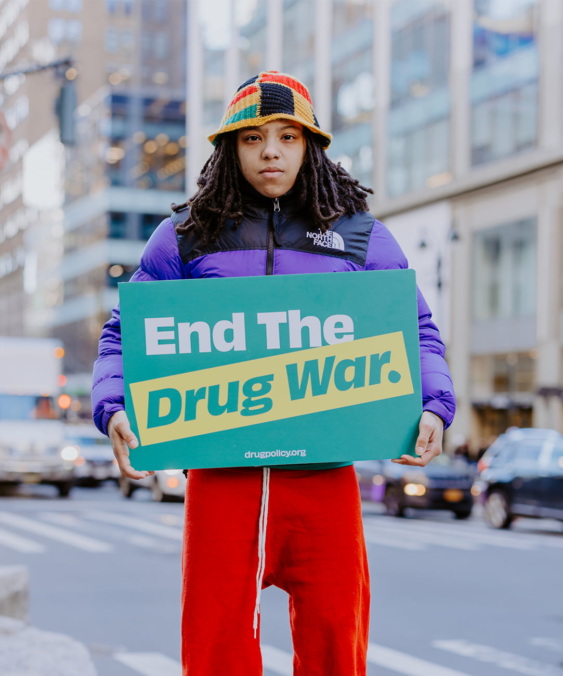
For more than 15 years in California, the Drug Policy Alliance has sponsored and supported some of the nation's most progressive drug policy reforms. DPA sponsored landmark ballot initiatives that legalized medical marijuana (Prop. 215 in 1996), created the largest treatment-instead-of-incarceration program in the country (Prop. 36 in 2000), and sought to reduce criminal penalties for drug use while dramatically expanding access to drug treatment (Prop. 5 in 2008). DPA was also a primary supporter of Prop. 19 in 2010, which sought to legally regulate marijuana for adult use and helped mainstream the issue nationwide. And in 2012, we worked closely with allies in California to pass a historic ballot initiative to reform the state’s “three strikes” law.
In 2012, DPA’s California office, with critical support from allies, succeeded in getting 911 Good Samaritan legislation signed and enacted into law. This law provides limited immunity to individuals who seek medical attention to save the life of someone experiencing an overdose. In 2013, we will continue our work to reduce overdose deaths by seeking expanded access to naloxone, a generic, non-narcotic antidote to opiate overdose.
DPA has worked tirelessly to increase sterile syringe access in California to prevent HIV and hepatitis C transmission. In 2011, we won key victories that expanded syringe access to every county in the state. We are preparing now to defend and expand those victories in 2014 when the state’s law allowing for non-prescription sales of syringes will have to be renewed.
DPA is committed to protecting patient access to medical marijuana in California by playing an active role in a number of state and local coalitions and by voicing priorities to Sacramento and Washington, D.C. In light of the decisive electoral victories in Colorado and Washington in favor of legally regulating marijuana for adults, DPA is excited about bringing this policy change to California in 2016. It is time to end decades of failed marijuana prohibition and replace it with sensible regulations for adult marijuana consumption, sales and cultivation. DPA and our allies are in the planning stages for a legalization voter initiative for the 2016 election.
With the 2012 “three strikes” reform’s two-to-one victory at the ballot box – as well as numerous polls demonstrating that more than 70 percent of Californians support reducing penalties for all drug possession and that more than 85 percent believe nonviolent drug offenders should not be crowded into our bursting prisons and jails – DPA believes now is the time for real sentencing reform in California. In 2013, we will build on our 2012 legislative efforts to reduce the criminal penalty for drug possession in California from a felony to a misdemeanor. This reform would move our drug policies toward a health-centered approach, cut wasteful drug war spending, and reduce the life-long barriers that follow a drug conviction. Likewise, DPA will pursue other sentencing reforms to eliminate outrageous racial disparities that are endemic in drug sentencing for people of color.
Learn more about our campaigns.
US Attorneys in California Say They Will Shut Down Dispensaries, Prosecute Landlords and Seize Properties Notwithstanding State Law
Obama Administration's Medical Marijuana Policies Now Worse Than Bush and Clinton Policies
Despite the Obama Administration's promise to respect state law and leave medical marijuana patients alone, its attack on patients and providers operating legally under state law is rapidly escalating. At least 16 landlords in California this week received letters stating that they are violating federal drugs laws and that state law will not protect them. The four US Attorneys in California are holding a press conference in Sacramento today in which they are expected to announce a broad crackdown on medical marijuana.
Advocates Urge Counties to Not Repeat the State's Failed Drug Policies and to Implement Health-Centered Approaches Instead
Advocates Call for Permanent Cuts to Prisons Through Sentencing Reform
Poll Finds That California Voters Believe "Too Many People in Prisons" and Support for Lessening Penalties for Drug Possession
SACRAMENTO – In his latest proposal to the Legislature, reportedly already embraced by Legislative Democratic leadership and poised for passage by majority vote, Governor Jerry Brown proposes guaranteed funding to local governments for building jail capacity and hiring sheriffs deputies and probation officers to supervise low-level, nonviolent offenders at the county level.
ACLU of California, Drug Policy Alliance, and the Ella Baker Center
It's time to reform California's sentencing laws. Californians are fed up with misguided policies that have packed our prisons & jails, drained our state budget and led to one of the highest rates of recidivism in the country.
Advocates Urge California to Focus on Resolving Crisis, Including Ending Prison as Response to Drug Use
9,000 in Prison for Drug Possession at Cost of $450 Million a Year
WASHINGTON, DC – The United States Supreme Court ruled today in Brown, et al. v. Plata, that the unconstitutional conditions of California's prisons were caused primarily by overcrowding and ordered California to reduce its prison population from over 200% of design capacity to 137.5% of capacity within two years.
Should California, or the country, legalize marijuana? Miron says "Yes," and for a multitude of reasons.
Advocacy Organizations Point to Simple & Safe Reforms as Key to Realignment's Success
SACRAMENTO – In his revised 2011-12 state budget, Governor Brown today recommitted to his criminal justice realignment plan, but left out safe and simple sentencing reforms that would ensure that the plan is effective and affordable. The governor's plan keeps people convicted of minor felonies at the county level instead of in state prison. Advocates highlighted, however, that a key part of the solution lies in changing minor offenses from felonies to misdemeanors so that the punishment and its associated taxpayer cost fits the crime.
Voters More Likely to Vote for Candidates Who Support Reducing Drug Possession Penalty
Press Teleconference at 11 A.M. Will Review Survey Findings, Discuss Plans to Achieve Reform