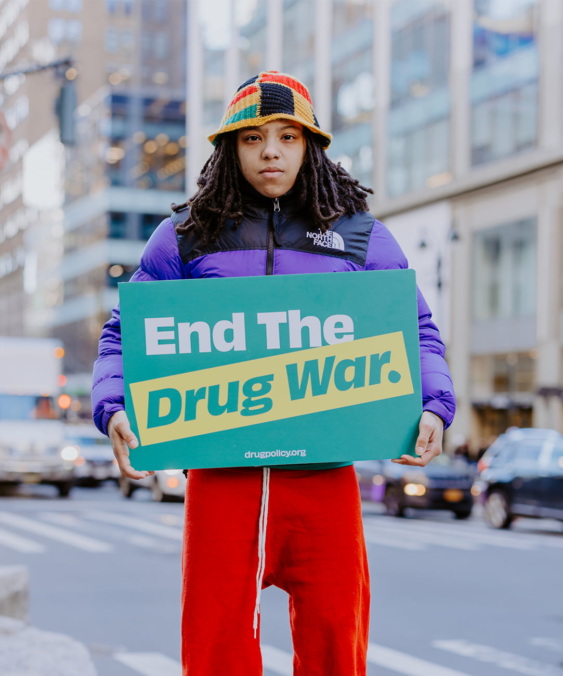
For more than 15 years in California, the Drug Policy Alliance has sponsored and supported some of the nation's most progressive drug policy reforms. DPA sponsored landmark ballot initiatives that legalized medical marijuana (Prop. 215 in 1996), created the largest treatment-instead-of-incarceration program in the country (Prop. 36 in 2000), and sought to reduce criminal penalties for drug use while dramatically expanding access to drug treatment (Prop. 5 in 2008). DPA was also a primary supporter of Prop. 19 in 2010, which sought to legally regulate marijuana for adult use and helped mainstream the issue nationwide. And in 2012, we worked closely with allies in California to pass a historic ballot initiative to reform the state’s “three strikes” law.
In 2012, DPA’s California office, with critical support from allies, succeeded in getting 911 Good Samaritan legislation signed and enacted into law. This law provides limited immunity to individuals who seek medical attention to save the life of someone experiencing an overdose. In 2013, we will continue our work to reduce overdose deaths by seeking expanded access to naloxone, a generic, non-narcotic antidote to opiate overdose.
DPA has worked tirelessly to increase sterile syringe access in California to prevent HIV and hepatitis C transmission. In 2011, we won key victories that expanded syringe access to every county in the state. We are preparing now to defend and expand those victories in 2014 when the state’s law allowing for non-prescription sales of syringes will have to be renewed.
DPA is committed to protecting patient access to medical marijuana in California by playing an active role in a number of state and local coalitions and by voicing priorities to Sacramento and Washington, D.C. In light of the decisive electoral victories in Colorado and Washington in favor of legally regulating marijuana for adults, DPA is excited about bringing this policy change to California in 2016. It is time to end decades of failed marijuana prohibition and replace it with sensible regulations for adult marijuana consumption, sales and cultivation. DPA and our allies are in the planning stages for a legalization voter initiative for the 2016 election.
With the 2012 “three strikes” reform’s two-to-one victory at the ballot box – as well as numerous polls demonstrating that more than 70 percent of Californians support reducing penalties for all drug possession and that more than 85 percent believe nonviolent drug offenders should not be crowded into our bursting prisons and jails – DPA believes now is the time for real sentencing reform in California. In 2013, we will build on our 2012 legislative efforts to reduce the criminal penalty for drug possession in California from a felony to a misdemeanor. This reform would move our drug policies toward a health-centered approach, cut wasteful drug war spending, and reduce the life-long barriers that follow a drug conviction. Likewise, DPA will pursue other sentencing reforms to eliminate outrageous racial disparities that are endemic in drug sentencing for people of color.
Learn more about our campaigns.
A California statewide survey reveals an electorate strongly in favor of reducing from a felony to a misdemeanor the possession of a small amount of illegal drugs for personal use. Support for this reform is both broad, with nearly three-quarters of voters backing the proposed change, and intense.
Center for Medicinal Cannabis Research, University of California
This report was submitted in response to the California legislature passing and Governor Gray Davis signing SB847, which commissioned the University of California to establish a scientific research program to expand the public scientific knowledge on purported therapeutic usages of marijuana.
California continues to fight a battle it cannot win. Every year, more and more people are arrested for marijuana possession. That enforcement disproportionately targets young people of color, especially African Americans. If California spent only a fraction of what it currently spends on marijuana arrests and prosecutions on drug treatment and education, we would be well on our way to a responsible marijuana policy.
California Office of AIDS
Protecting Law Enforcement from Needle Stick Injuries - Made in cooperation with the Los Angeles Police Department (LAPD), this educational documentary explains how officers can reduce the risk of infection by needle sticks on the job. LAPD officers visit a needle exchange on their beat and explore the ways that Needle Exchange Programs help keep law enforcement officers and their communities safer. Produced by Gretchen Hildebran.
San Diego – On March 28, the San Diego City Council will vote on an ordinance that amounts to a de facto ban on medical cannabis facilities in the City of San Diego. If passed as currently written, this unduly restrictive ordinance would threaten the quality of life for some of the most vulnerable members of our community and would deny safe access for thousands of patients in the city. The Drug Policy Alliance (DPA) urges the City Council to oppose this ordinance.
Saturday, March 19th at Ricardo Montalban Theatre in Hollywood
"Next Steps for Marijuana Reform in California," a day-long gathering of marijuana reform advocates, will take place March 19th at the Ricardo Montalban Theatre in Hollywood. In the wake of Proposition 19 's remarkably strong showing at the polls last year, this conference will address ongoing efforts to end failed marijuana prohibition in California, steps to reform the state 's medical marijuana laws, and priorities for marijuana reform in the coming years.
Ecstasy Use Fact Card is Consistent with Public Health Best Practices Around the Country, Says Harm Reduction Expert
SIF Allow People to Consume Their Drugs with Sterile Equipment in Presence of Medically-Trained Staff; Reduce HIV, Overdose Deaths and Public Drug Use, While Not Increasing Drug Use
SF Elected Officials Need to Embrace Science and Public Health Approach
Advocates Commend Strategy to Reduce Victimization and Expensive Incarceration for Low-Level Offenses
SACRAMENTO – In his proposed 2011-12 state budget released today, Governor Jerry Brown is urging structural changes to the state's corrections system that advocates say will reduce both crime and waste. The proposals include authorizing counties to handle people convicted of "nonviolent, non-serious, non-sex offenses, and without any previous convictions for such offenses," according to budget documents.